RAG Isn’t AI Memory—It’s Something More Powerful
Why the hardest part of Retrieval Augmented Generation has nothing to do with engineering

Jan 29, 2026
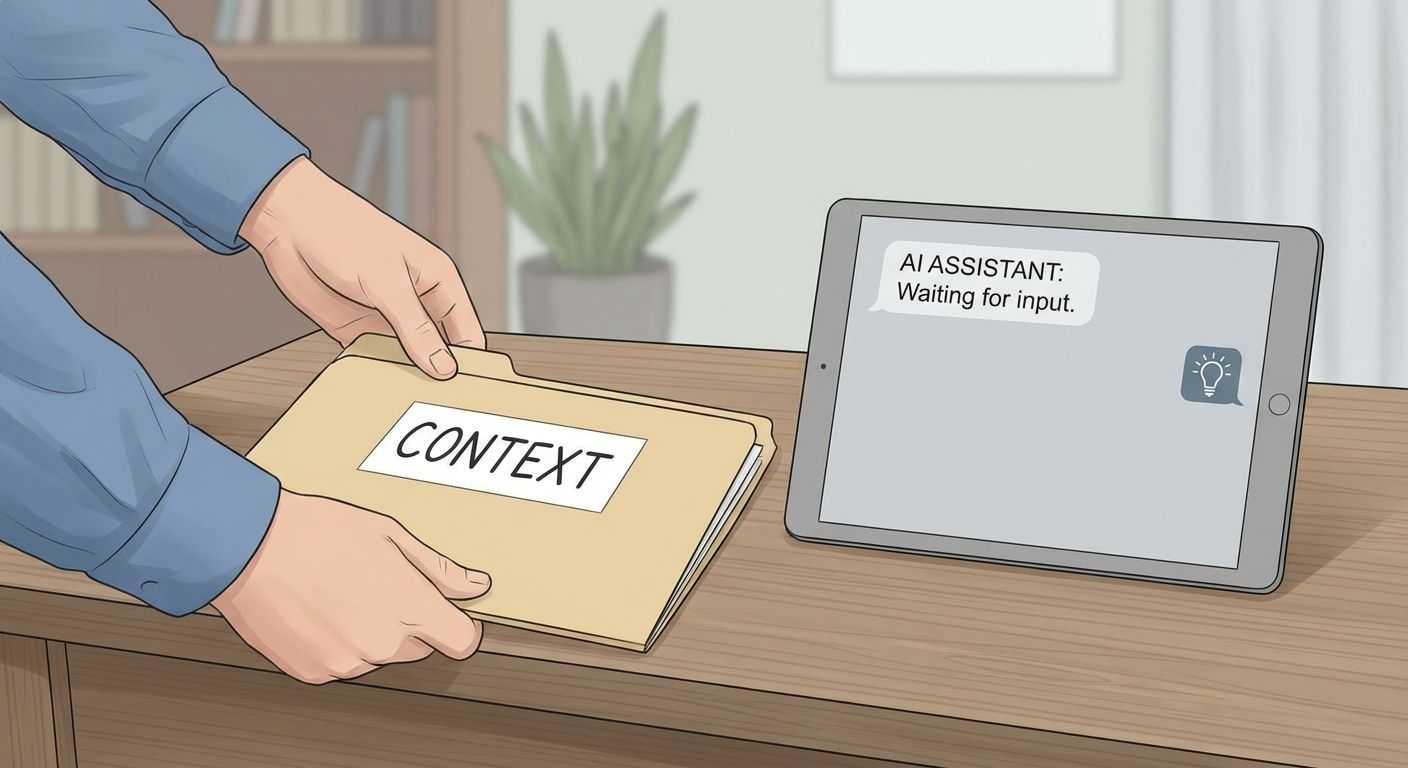
If you ever wondered about “AI memory,” RAG (Retrieval Augmented Generation) is probably the word you were looking for. But is it difficult to implement?
What RAG Actually Does
The idea is simple: language models know a lot, but they don’t know your data. RAG lets you store your documents, texts, images, sometimes even videos, in a way that an AI can retrieve and use when answering a question.
These contents are stored as vector representations, which makes it possible to search by meaning rather than keywords. When a question is asked, the system retrieves the most relevant pieces and injects them into the AI’s context to guide its response.
In practice, RAG is what turns a generic AI into a domain-specific one.
Where Things Actually Get Hard
What’s important is that the hard part is rarely technical.
The real questions are:
- What information do we include?
- How do we split and structure it?
- What should be available in which situation?
Those are business and product decisions, not engineering ones.
Why RAG Matters
That’s why RAG is powerful. It allows non-technical teams to shape how AI behaves, without retraining models or writing code.
RAG isn’t magic. It’s a mechanism. But it’s often the difference between an AI that sounds smart and an AI that’s actually useful (punchline!).