Bernard Magrez Institute: the case for smaller models
UNITEC invited Hugo to a masterclass on AI and automation for startups. In July 2024 the popular answer was to reach for the biggest model available. He argued the opposite.
Jul 21, 2024
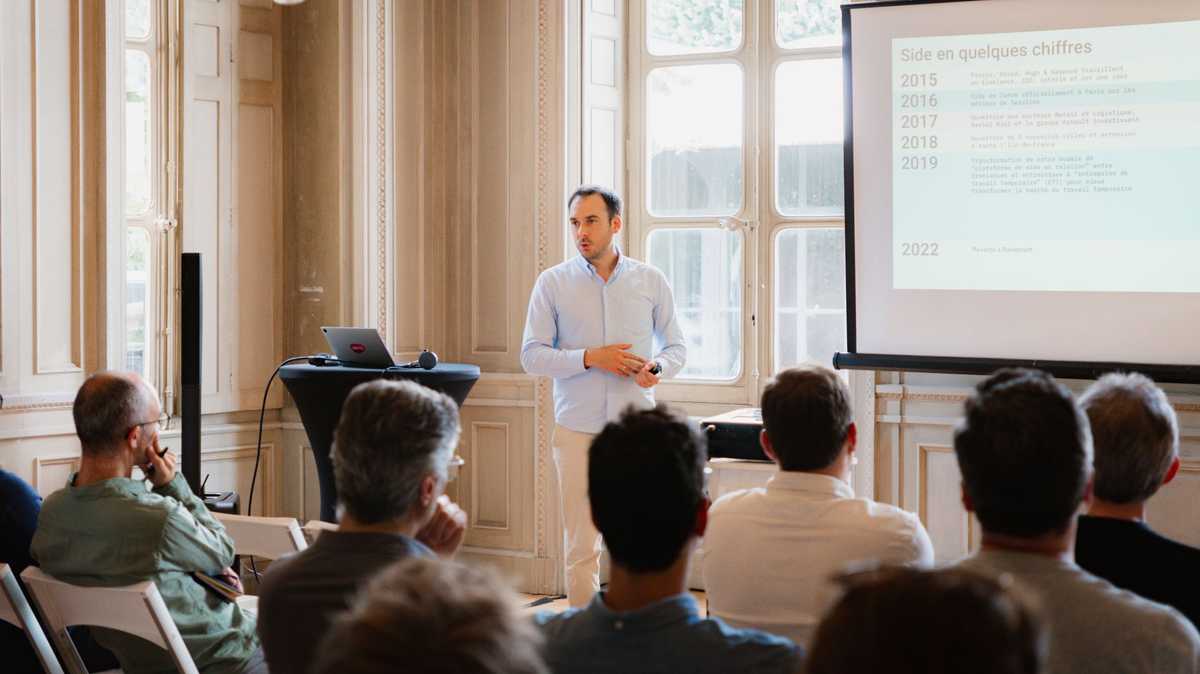
In July 2024, UNITEC invited Hugo to speak at a masterclass on AI and automation at the Bernard Magrez Cultural Institute in Bordeaux, alongside other founders and operators from the French Tech Bordeaux ecosystem.
The argument: smaller models
In mid-2024 the default advice was to reach for the largest model you could afford and treat everything else as prompt engineering. The talk made the opposite case.
"Small Language Models are the next frontier in AI," Hugo said. "They allow us to create tailored content that speaks directly to the needs and interests of potential clients."
The reasoning was commercial before it was technical. A model cheap enough to sit inside a product you actually charge for is worth more than a model that scores better on a benchmark you will never sell. Once a model clears the quality bar for the specific job, the money you spend above that bar buys nothing a customer can see.
Where that came from
Hugo co-founded Side, the French temporary-work platform, and took it from its first fundraising through to its sale. Side's job was turning staffing paperwork into software that ran itself, which is the same shape of problem, minus the language model. You can read the longer version of that story.
The part that carried over is unglamorous: the difficulty is almost never the algorithm. It is the edge cases the business already knows about and has never written down anywhere. No model size fixes that.
What held up, two years on
Added September 2026.
The economics held. We have since shipped work where the model is deliberately the least interesting component, and we wrote up the compression question separately in how far you can shrink a model before quality breaks.
The framing did not hold. In 2024 the pitch was about generating tailored content. Almost nothing we have built since is a content generator. It is quotation builders, order capture from voice notes, pricing systems, document processing: ordinary business software with a model doing one bounded job somewhere inside it.
So the instinct about model size was right, and the guess about the product was wrong. The interesting work turned out to be the software around the model, not the model.